

Here is the fully formatted article with the internal and external links embedded:
Meta Description: Here’s a guide for roommates on what mistakes to avoid the next time you share your space(s)! Read about 14 big things that should never happen at home if you want to live peacefully and tension free.
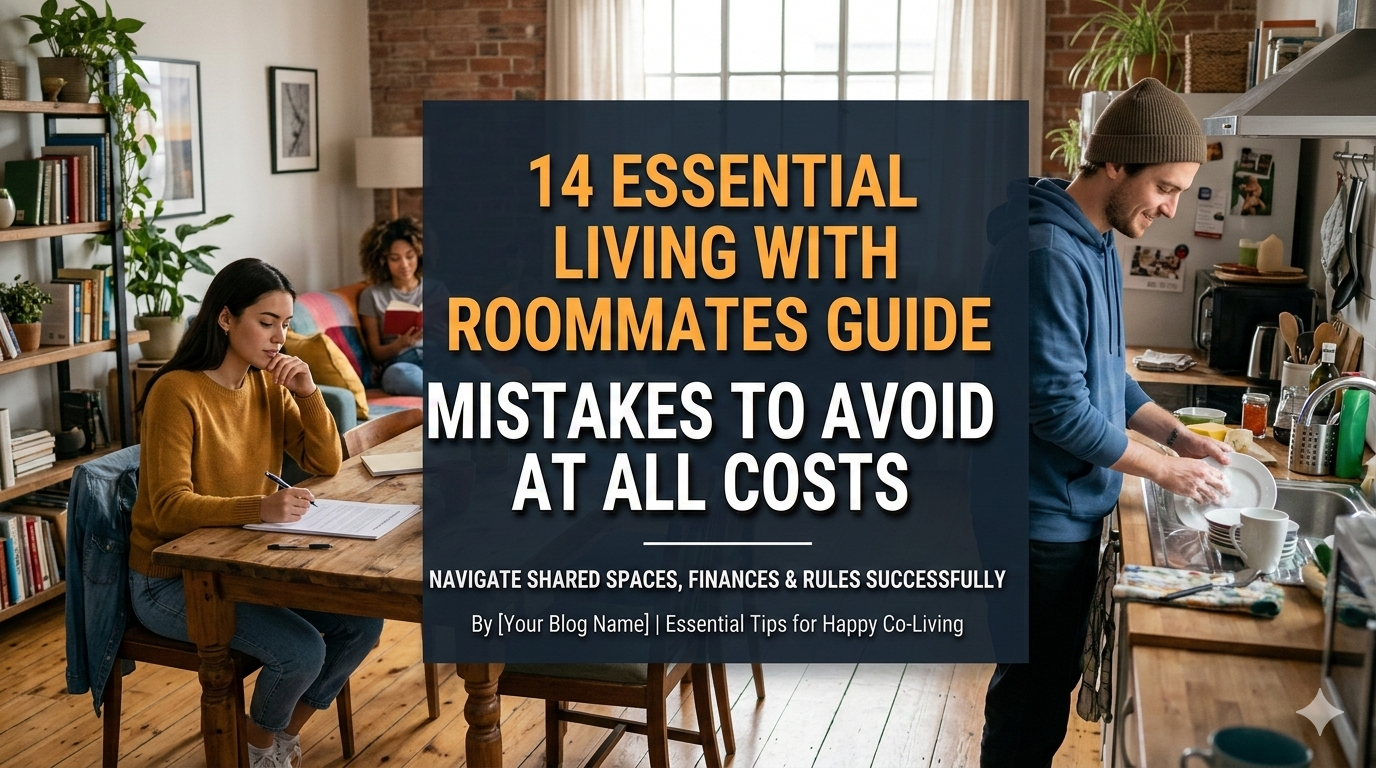
We Need to Do Better: 14 Living with Roommates Guide Mistakes
It must be cool to live with roommates. You split the bills, share the space and perhaps forge lifetime friends.
But here’s the thing — shared living can turn bad real quick.
The majority of people dive into roommate situations without a plan. They avoid the tough conversations, overlook early warning signs and feel miserable. Some even forfeit friendships over it.
This guide to living with roommates will cover the 14 biggest mistakes people make — and how to avoid them. Whether you’re going in with strangers or your best friends, this article will save you a lot of headaches.
Mistake #1: Ignoring the Roommate Agreement Conversation
This is mistake number one. People move in with each other thinking it will just all magically work out.
It won’t.
Before you open a single box, sit down and talk. Cover the basics:
- Who pays what bill?
- What are the quiet hours?
- Can guests stay overnight?
- What is your frequency for cleaning common areas?
A roommate agreement doesn’t need to be a legal contract. Even a Google Doc works, shared or otherwise. The goal is to get everyone aligned before issues arise.
Why Written Rules Are Better Than Verbal
Verbal agreements can be easily forgotten or twisted afterward. Written documents don’t allow “I never said that” defenses. It takes the guesswork out and protects everyone involved.

Mistake #2: Never Discussing Money Upfront
Money is awkward to discuss. So most people avoid it.
Big mistake.
Financial stress is a top cause of roommate relationships ending. You have to discuss money early and be utterly frank.
| Money Topic | What You Should Talk About |
|---|---|
| Rent split | Even split or by size of room? |
| Utilities | Who sets up accounts? |
| Groceries | Shared or separate? |
| Late payments | What will happen if someone is unable to pay? |
| Security deposit | Who gets it back and how? |
Do not take for granted that everyone else has the same financial situation as you do. Some are barely scraping by, paycheck to paycheck. Others are comfortable. Understand where everyone is positioned before you commit.
Mistake #3: Overlooking Red Flags in Roommate Choice
Finding a roommate can seem pressing when rent is coming due soon. That sense of urgency causes people to ignore obvious warning signs.
Look for these red flags early on:
- They cancel or arrive late to your first meeting
- They are vague about their income or job
- They bad-mouth every previous roommate
- You are pressured to decide quickly
- Their current place is a mess
Trust your gut. If something feels wrong in the search phase, it will likely feel worse once you’re sharing a kitchen.
Screening Roommates the Smart Way
Before you say yes, ask yourself these three simple questions:
- Why are you moving away from your current location?
- What’s your daily schedule like?
- How would you recommend responding to disagreements?
The answers to these questions will reveal so much about their personality and compatibility.
Mistake #4: Thinking Your Schedules Will Simply Align
You work nights. Your roommate works days. You think this is perfect.
Maybe. Maybe not.
Schedules impact everything — how long the shower runs, when the kitchen can be used, noise levels, guests and TV time. If you refrain from discussing this, your routines will constantly be bumping against one another.
Talk about:
- Wake-up and bedtime routines
- Work-from-home days
- Gym or activity schedules
- Weekend habits
You are not supposed to fit together exactly. But you need to know what you’re each working with.
Mistake #5: Allowing Unstated Cleaning Standards
This one leads to more fights than just about anything else.
Few people have the same definition of “clean.” To one person, dirty dishes sitting in the sink for two days is fine. To another, it’s a personal assault.
Neither is wrong — they are just different.
The solution is simple: discuss cleaning expectations before you move in.
Establish a Cleaning Schedule You Can Actually Stick To
| Area | Frequency | Who Is Responsible |
|---|---|---|
| Kitchen counters | Every day | Whoever uses it last |
| Dishes | Daily | Each person |
| Bathroom | Weekly | Rotating |
| Floors | Bi-weekly | Split equally |
| Trash | As needed | Whoever fills it |
Post it somewhere prominent — on the refrigerator or in a shared notes app. That makes it easy to refer back to.
Mistake #6: Disregarding Personal Space and Privacy
Living together doesn’t mean living in each other’s pockets.
Everyone needs alone time. Everyone has things that are private. When roommates don’t honour this, resentment grows quickly.
Simple rules to follow:
- Knock before entering a room
- Do not go through each other’s belongings
- Be kind to each other after a long day
- Refrain from making your roommate’s personal information public
This isn’t about being unfriendly. It’s about basic respect.
Mistake #7: Borrowing Without Asking
This seems obvious. It’s not.
People borrow things all the time without asking — a bit of shampoo, a phone charger, some leftovers in the fridge. In the moment, it seems innocuous. Over time, it accumulates into genuine frustration.
Always ask first. Even for small things.
If you are borrowing frequently, it may be time to restock your own supplies. Don’t use your roommate’s stuff as a safety net for your own.
The “Label It” Strategy
Some roommates label shelves and containers in common areas like the fridge. This clears up any confusion about what is yours vs. theirs. It seems petty — and it works fantastically well.
Mistake #8: Ignoring Conflict Until It Erupts
Most people hate confrontation. So they stay silent when something annoys them.
They say nothing once. Then twice. Then ten times. And then they blow up over something small — and the other roommate is completely confused about what just happened.
This is passive-aggressive living. And it destroys roommate relationships.
The wiser path is to speak up early and calmly.
Try this formula: “Hey, I wanted to talk about something. When [X happens], I feel [Y]. Could we [Z instead]?”
For example: “I feel stressed in the mornings when dishes are left out overnight. Can we tackle the cleanup before bed?”
It’s direct. It’s kind. And it works.
Mistake #9: Not Setting Guest and Overnight Visitor Policies
Guests are wonderful — until they’re not.
Your roommate’s boyfriend sleeps over four nights a week. Your roommate’s friends drop by unannounced on weeknights. These situations get uncomfortable quickly.
Set guest rules upfront:
- How far in advance does a guest need to give notice?
- How many nights in a row is acceptable?
- Is there a total night limit per month?
- Are guests allowed unrestricted access to common areas?
This is especially important if one roommate has a significant other. A partner who practically lives there but pays no rent creates real tension.
Mistake #10: Failing to Have a Plan for Groceries and the Kitchen
The kitchen is the most common — and most fought-over — space in any shared home.
There are two main models that work for roommates:
Option A — Total Separation Everyone buys their own food, labels everything, and has their own shelf. Clean and simple.
Option B — Partial Sharing Split the cost of basics (cooking oil, condiments, cleaning supplies) and buy personal items separately.
Whichever you choose, make it a joint decision. Don’t assume everyone is on the same page.
Kitchen Etiquette That Saves Relationships
- Clean up immediately after cooking
- Replace things you finish
- Don’t leave food in the sink
- Keep your section of the fridge tidy
- Ask before consuming anything that isn’t labelled
Mistake #11: Ignoring Noise
Sound travels in shared spaces.
Your 7 AM workout playlist. Their midnight gaming session. The conference call you take in the living room. All of this impacts your roommates.
Noise is one of the most frequently cited complaints in shared housing — and it’s among the easiest to address.
Set quiet hours. Most people agree on something like 10 PM to 8 AM on weeknights. Adjust based on everyone’s schedule.
Use headphones when you can. Keep calls in your room. Give a heads-up before having people over.
These are small things. But they make a real difference to daily comfort.
Mistake #12: Not Reading the Lease Before Signing
This is a major legal error that people make far too frequently.
Your lease isn’t simply a formality. It sets the rules for your rights, your responsibilities, and what happens if things go wrong. Failing to read it may make you financially liable for things your roommate does.
What to look for in your lease:
- Are all roommates listed on the lease?
- What happens if one person wants to leave early?
- Who is responsible for damages?
- What’s the subletting policy?
- Are pets allowed?
If everyone’s on the lease, they’re equally responsible. That’s both protection and risk. Know what you’re signing. For a deeper look at tenant rights and shared housing laws, Shelter’s housing advice pages are a useful resource.

Mistake #13: Allowing Small Problems to Grow Into Big Ones
Shared living brings a litany of minor irritations. That’s normal.
What’s not healthy is allowing those little things to build up without addressing them.
Think of a cup filling with water. Each ignored annoyance is another drop. Eventually, the glass overflows — and when it does, the reaction is way out of proportion to what triggered it.
The fix is regular check-ins.
The Monthly Roommate Check-In
Take 20 minutes once a month to talk through what’s working and what’s not. Keep it relaxed — over dinner or coffee works well.
Ask each other:
- How are you doing?
- What could we be doing better as roommates?
- What’s been working great? Is there anything that isn’t?
This keeps the lines of communication open and ensures small problems don’t turn into big ones.
Mistake #14: Failing to Plan for the End of Your Lease
Every living situation eventually ends. Most people don’t think about this until it’s too late.
Who’s keeping the apartment? Who’s leaving? Who gets the security deposit? What happens to shared furniture?
These conversations are awkward. But they’re far less awkward when done early — as opposed to in a panic two weeks before the lease ends.
Start planning 60 to 90 days before your lease ends. This gives everyone enough time to make new arrangements without feeling pressured.
At a Glance: The 14 Mistakes
| # | Mistake | Quick Fix |
|---|---|---|
| 1 | No roommate agreement | Write it before you move in |
| 2 | Avoiding money talk | Talk finances upfront |
| 3 | Ignoring red flags | Screen your roommates carefully |
| 4 | Assuming schedules will align | Discuss daily routines |
| 5 | No cleaning standard | Create a cleaning routine everyone uses |
| 6 | Ignoring personal space | Respect boundaries at all times |
| 7 | Borrowing without asking | Always ask first, even for small things |
| 8 | Avoiding conflict | Address issues sooner and calmly |
| 9 | No guest policy | Set rules around overnight stays |
| 10 | Winging it with the kitchen | Agree on grocery and kitchen plans together |
| 11 | Noise issues | Set quiet hours; use headphones |
| 12 | Not reading the lease | Read every line before signing |
| 13 | Letting small issues fester | Schedule monthly check-ins |
| 14 | No end-of-lease plan | Start planning 60–90 days out |
How to Build a Roommate Dynamic That Doesn’t Suck
Avoiding slip-ups is half the battle. The other half is actively building a positive living environment.
So what do the best roommate relationships have in common?
They communicate often and honestly. Not only after something goes wrong — but regularly, organically, and without making it a big event.
They give each other grace. Bad days happen. Somebody’s going to leave a dish out or forget to buy toilet paper. Small failures matter less than how you handle them.
They celebrate the wins. A tidy apartment, a smoothly divided bill cycle, a nice dinner together — notice the positive things too.
They keep expectations realistic. Your roommate doesn’t have to be your best friend. A good living situation only requires mutual respect and basic consideration.
For more advice on navigating shared flat life, visit Shared Flat Living — a resource built specifically for people who want to make co-living work.
FAQs: Living With Roommates
Q: What do I need to include in a roommate agreement? A: At the very least, cover rent and utilities, cleaning responsibilities, guest policies, quiet hours, food-sharing expectations and what will happen if someone wants to move out early. The more specific, the better.
Q: How can I raise an issue without it starting a fight? A: Use calm, non-blaming language. Separate the action from the person doing it. Try: “When this happens, I feel this way — can we find a solution?” Timing matters too — don’t bring it up when either of you is stressed or exhausted.
Q: Is living with friends or strangers better? A: Both have pros and cons. Friends bring trust but risk the friendship. Strangers start fresh but need more vetting. The key in either case is clear communication and expectations set from day one.
Q: What if my roommate ignores the agreed rules? A: First, meet up and talk about it. If that doesn’t work, try putting your concerns in writing. If the issue persists and it’s a lease violation, discuss it with your landlord. As a last resort, check your legal options according to the terms of your lease.
Q: How do we split rent fairly if our rooms are different sizes? A: A common approach is to divide proportionally based on square footage. Another option is for the person in the bigger room to pay more by a flat amount you all agree upon. The trick is to agree in advance — not after someone feels cheated.
Q: Which is the best app to manage shared expenses with roommates? A: Apps like Splitwise, Venmo and Honeydue are commonly used. Splitwise in particular was made for tracking shared expenses and IOUs within groups.
Q: What should I do about a roommate who always has guests? A: If you have a guest policy, refer to it. If you don’t, it’s time to create one. Be specific — number of nights per week, notice required, which spaces guests may use. Focus on your needs, not on judging their social life.
Wrapping It All Up
Living with roommates can truly be one of the best experiences in shared living. It will save you money, teach you compromise and give you a sense of community.
But only if you enter prepared.
This living with roommates guide was created because most people learn these lessons the hard way. They don’t discuss money until there’s a late bill. They don’t mention the dirty dish until it’s been sitting there for weeks. They never read the lease until things go south.
It doesn’t have to be like that.
Start with a simple conversation. Set expectations early. If something bothers you, say so. Plan ahead when things change.
Shared living doesn’t mean finding the perfect roommate. It’s about being a good one — and creating the space for others to be one as well.