

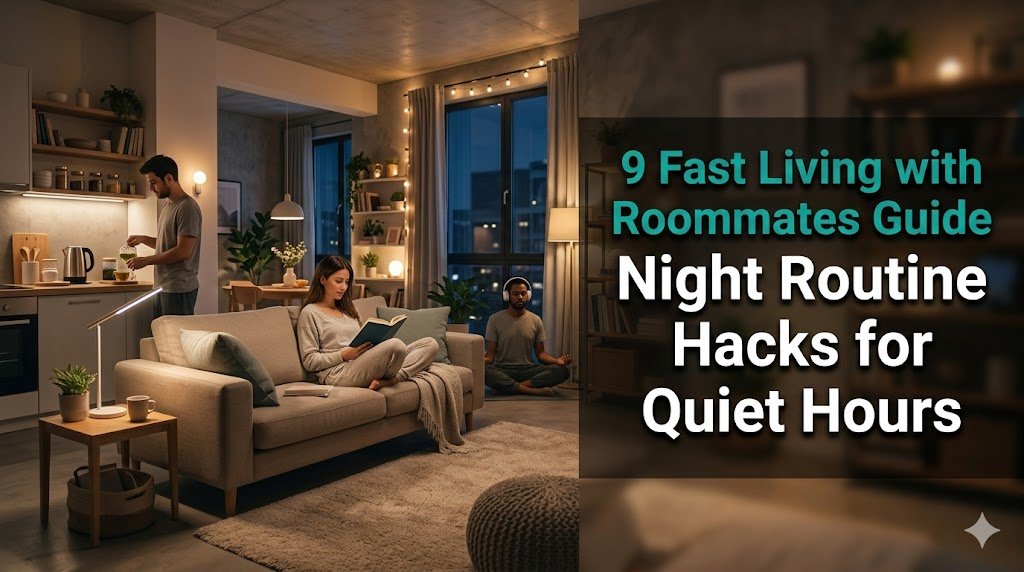
Meta Description: Your roommate life guide to quiet evening is finally here — try out these 9 fast and practical hacks for a respectful, stress-free night with your roommates.
Night Routine Hacks: Roommates Living Together — Fast Guide for Quiet Hours
Roommates can be an excellent part of life. You divide the bills, share the space, and maybe even develop lifelong friendships. But when the sun goes down? That’s the part where things can get tricky.
Different sleep schedules. Loud midnight snacks. Bathroom bottlenecks at 11 PM. Sound familiar?
A good night routine isn’t only healthy — it’s the glue that keeps a shared home from splintering. No matter if you’re a night owl or an early riser, these 9 quick hacks will help you glide through your evening without waking anyone up or creating any unjustified drama.
Let’s get into it.
Your Night Routine Matters More When You Share a Home
When you live solo, your habits impact only yourself. But in a shared space, every decision you make in the evening sends ripples out to those around you.
Slamming a cabinet. Blasting a show. Leaving the kitchen light on at 2 AM. Small things add up quickly. They build over time, creating a tension that makes home seem anything but relaxing.
A peaceful night routine safeguards everyone’s sleep, mood, and sanity.
It also lets your roommates know that you respect them — and that goes a long way when you share a bathroom, a fridge, and a front door.
Hack #1: Establish a “Wind-Down Window” Everyone Can Agree To
Before even considering personal habits, get your whole household on the same page.
Choose a time — say, 10 PM or 10:30 PM — when loud activities end. That’s not to say everyone needs to be in bed. It just means music is turned down, TV volume drops, and conversations move to bedrooms or are kept low.
Call it your Quiet Hours window.
How to Make It Work
- Ask it casually, not like a formal house meeting. Example: “Hey, should we come up with a quiet time for nights?”
- Keep it flexible. The cutoff on weekends could be even later.
- Put it on a shared whiteboard or group chat so no one forgets.
Having this one conversation can save months of silent frustration.
Hack #2: Get Yourself a Kitchen Kit That’s Silent
The kitchen becomes the loudest room in the house after dark. Dishes clinking. Microwaves beeping. Cabinets banging shut.
Here’s an easy workaround: assemble a late-night kitchen kit.
It’s a small collection of things you get ready ahead of time so you’re not rummaging through shelves at midnight.
What to Put in Your Kit
| Item | Why It Helps |
|---|---|
| Paper plates or a dedicated quiet bowl | No dish clinking noise |
| Silicone utensils | Softer than metal on bowls and pans |
| Pre-made snacks in your own shelf section | No need to dig around |
| A mini flashlight or phone light | Avoid turning on overhead lights |
| Microwave covers | Reduces splatter and muffles some sound |
Set it up once. Use it every night. Your roommates would never even know you’d been in there.
Hack #3: Become a Quiet Shower Expert
Showers at night seem quiet — until you really think about it.
Water pressure can be loud. Bathroom fans roar. Shampoo bottles crash onto tile floors. And don’t forget the dramatic hair dryer finish.
Here’s how to make your night shower almost undetectable.
Simple Swaps for a More Peaceful Bathroom
- Lower the water pressure slightly. It still works and is way quieter.
- Avoid the blow dryer or use it on the lowest setting with a towel over it.
- Install a rubber mat on the bathroom floor to dampen sounds of dropped items.
- Close the bathroom door before turning anything on. Two layers of sound blocking.
- Set your toiletries out before you go in so you’re not searching around.
A 10-minute prep saves everyone 30 minutes of being annoyed while lying awake.
Hack #4: Set Up a Charging and Tech Station in Your Room
This one is huge — and most people never consider it.
How often have you trekked out to the living room in the middle of the night to retrieve your phone charger, locate the remote, or plug in your laptop? Any time you leave your room is an opportunity to make noise.
Fix it once.
Build Your Own In-Room Station
Create a small corner in your room with:
- A multi-port USB charger
- Your laptop charger
- Earphones or headphones
- A power strip with everything you constantly need
Keep everything in one spot. Charge at night. Stay in your room.
This also makes for better sleep since you won’t be tempted to scroll on the couch until 1 AM.
Hack #5: Wear Headphones Like Part of Your Personality
If there’s one thing that makes living with others a million times easier, it’s a decent pair of headphones.
Late-night shows, music, YouTube rabbit holes, video calls with friends in other time zones — all of it stays in your ears and out of the hallway.
Choosing the Right Pair for Shared Living
| Type | Best For | Noise Level to Others |
|---|---|---|
| Over-ear wired headphones | Long sessions, comfort | Silent |
| Wireless earbuds | Flexibility, movement | Silent |
| Bone conduction headphones | Awareness of surroundings | Nearly silent |
| Cheap earbuds | Budget option | Silent |
You don’t have to break the bank. Even a $15 pair of wired earbuds will completely transform your night routine for your roommates.
Pro tip: Get into the habit of putting them on before 9 PM. It tells your brain that you’re going into quiet mode, too.
Hack #6: Figure Out the Bathroom Schedule Before Bedtime
Bathroom conflicts are among the leading causes of roommate stress. And they occur most frequently in the morning — which means they begin the night before.
If you don’t figure out the morning routine before going to bed, you’ll be knocking on doors and running late by 7 AM.
A Simple Bathroom Schedule System
Here’s how to arrange it without making it weird:
- Ask your roommates what time they need to be up and out.
- Space shower times by at least 20–30 minutes.
- If you share one bathroom, the person who wakes up earliest gets the first shower, no exceptions.
- Post the rough schedule on the bathroom door or in your group chat.
It takes five minutes to set up and saves you every single morning.
Sample Shared Bathroom Schedule (3 Roommates)
| Person | Wake-Up Time | Bathroom Window |
|---|---|---|
| Roommate A | 6:00 AM | 6:05 – 6:25 AM |
| Roommate B | 6:30 AM | 6:35 – 6:55 AM |
| Roommate C | 7:00 AM | 7:05 – 7:25 AM |
Clean, simple, no drama.
Hack #7: Go Dark — Literally
Light is sneakier than sound when it comes to disrupting sleep. Hallway lights. Kitchen lights bleeding under bedroom doors. The glow of your phone screen as you move past someone’s room.
Going “dark” at night is one of the most considerate things you can do in a shared home.
Your After-Dark Lighting Rules
- Use a small nightlight or phone flashlight instead of overhead lights after 10 PM.
- Get a door draft stopper — it keeps light (and sound) from leaking into hallways.
- Lower your phone brightness when walking through shared spaces.
- Use warm-toned smart bulbs in the kitchen if you must have light. They’re less harsh and less disruptive.
- Dim your laptop or tablet screen to the lowest comfortable level.
Light disrupts melatonin. According to Harvard Health Publishing, even mild exposure to bright light at night can push back a person’s sleep by an hour or more. Protect your roommates’ sleep — and your own.
Hack #8: Wrap Up Conversations and Calls Before 9 PM
You’ve had a long day and want to call your best friend, your mom, or check in with your partner. Totally valid.
But phone calls at 11 PM in a shared apartment? Even with a door closed, voices carry.
Smarter Ways to Stay Connected at Night
- Have a soft rule that calls end by 9 PM.
- If you need to call later, use text or voice messages instead.
- For video calls, wear headphones and type rather than speak when possible.
- Move calls to a room furthest from sleeping roommates.
- Give people a heads-up: “I go quiet after 9, text me!”
It sounds like a sacrifice. But it does wonders for your sleep too. Stimulating conversations and screen time right before bed are known to make it harder to fall asleep.
Hack #9: Do a 5-Minute “Night Reset” Before Sleep
This last hack isn’t just about being quiet — it’s about being a genuinely good roommate overall, which makes the whole living situation smoother.
Set aside five minutes before bed to reset all of the shared spaces.
Your 5-Minute Night Reset Checklist
- ✅ Wipe down any kitchen surfaces you used
- ✅ Load your dishes in the dishwasher or rinse them
- ✅ Turn off lights in all shared spaces
- ✅ Make sure the front door is locked
- ✅ Pick up anything you left in the living room
- ✅ Make sure the TV or any shared devices are switched off
- ✅ Return anything you borrowed to its rightful place
This takes almost no time. But waking up to a clean, organized shared space changes the energy of the entire next day for everyone in the house.
It’s one of those invisible habits that makes people say “I love living with them” without knowing exactly why.
How All 9 Hacks Work Together
Each of these hacks is powerful on its own. But combine them, and they create a nearly frictionless night routine.
Here’s what a typical night might look like with all 9 in play:
8:30 PM — Wind-down window begins. Volume goes low. Phone call wrapped up.
9:00 PM — Headphones on. Grab a snack from your pre-set kitchen kit using your flashlight.
9:30 PM — Quick shower with low water pressure. Towel-dry hair instead of blow-drying.
10:00 PM — Lights dimmed in your room. Devices plugged in at your charging station.
10:15 PM — 5-minute night reset of shared spaces.
10:20 PM — In bed. Everything sorted for the morning.
That’s a calm, respectful, and genuinely healthy night. Every night.
What Happens When You Ignore Quiet Hours
It’s worth being frank about what happens when people don’t put in this effort.
Roommate tension builds slowly. It seldom starts with one big fight. It’s the third cabinet slam in a row. It’s a whole week of 1 AM TV sessions. It’s the bathroom argument that was really about months of small frustrations stacking up.
Common Nighttime Roommate Conflict Triggers
| Behavior | How Often It Causes Issues |
|---|---|
| Loud TV or music after 10 PM | Very common |
| Bathroom noise early morning | Very common |
| Bright lights in shared spaces | Common |
| Late-night phone calls | Common |
| Dirty dishes left overnight | Extremely common |
| Guests arriving late | Occasional |
The good news? Nearly everything on that list can be fixed with the hacks in this guide.
For more tips on keeping the peace at home, check out Shared Flat Living — a great resource packed with advice for anyone navigating life in a shared space.
Turning It Into a House Culture, Not Just Your Habit
The ideal outcome isn’t just you having a great night routine. It’s your entire household adopting a culture of mutual respect after dark.
You can lead that change without making it awkward.
Share one tip at a time. Set an example. When a roommate notices you’re always considerate at night, they often naturally start doing the same. People match energy.
You could even send this article to your group chat with a casual “stumbled across this, kinda useful” and let the ideas plant themselves.
Night Routines in Shared Living: Your Questions Answered
Q: What time should quiet hours start in a shared apartment? Most roommates agree that 10 PM works well on weeknights. Weekends can stretch to 11 PM or midnight. The key is to agree upfront rather than assume.
Q: What if my roommate keeps ignoring our quiet hours agreement? Start with a calm, private conversation. Use “I” statements — “I’ve been losing sleep when the TV is loud after 10.” If it persists, revisit the agreement together and see if the timing needs adjusting.
Q: Is it inappropriate to shower late at night in a shared home? Not at all — but being conscious of noise and light helps a lot. Lower the water pressure, skip the blow dryer, and leave the bathroom fan running briefly so steam doesn’t pool.
Q: How do I tell a roommate their habits are interfering with my sleep without making it awkward? Choose a neutral moment — not right after the incident. Keep it light and solution-focused: “Is there a way we could come up with a quiet time for nights? I haven’t been sleeping too well lately.”
Q: Can one person’s night habits really affect the whole house? Absolutely. Light, sound, and even smell (yes, cooking smells) travel through shared spaces easily. One person’s habits — good or bad — set the tone for everyone else.
Q: What’s the single most important night routine hack for shared living? If you could only choose one: headphones. They eliminate the most common source of nighttime noise conflict instantly and require zero coordination with anyone else.
Wrapping It All Up
Living with roommates doesn’t have to mean abandoning your evenings or tiptoeing after dark. It just means being slightly more intentional about how you move through your shared home when the sun goes down.
These living with roommates guide night routine hacks are not complicated. They don’t need fancy equipment or huge sacrifices. They just take a little awareness and a genuine commitment to make cohabitation work for everybody.
Try one hack this week. Maybe it’s the charging station in your room. Maybe it’s putting on headphones after 9. Start with the easiest one and build from there.
A peaceful home at night makes every morning better. And that’s worth five minutes of planning.