

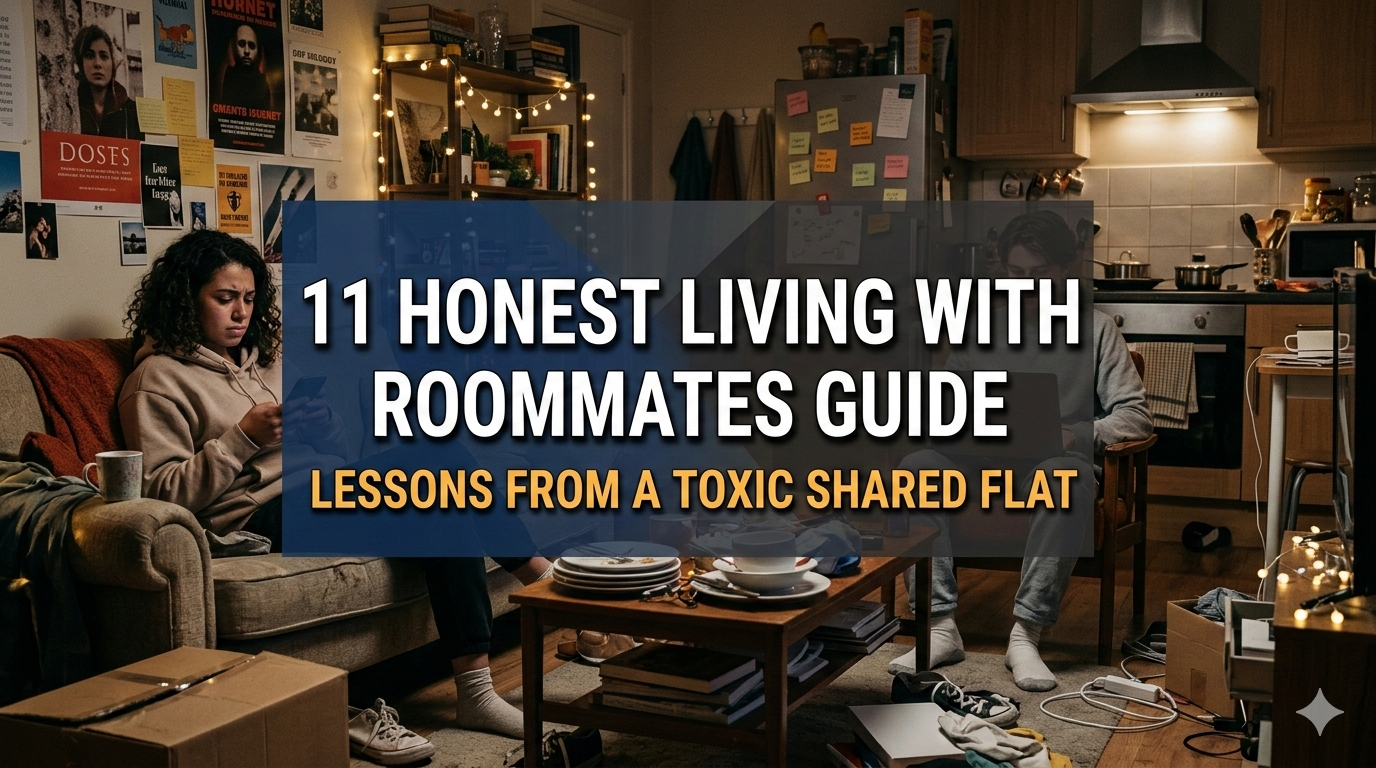
Living with roommates can be one of those life experiences that either builds character or breaks your spirit, depending on how things shake out. I’ve been there, staring at a sink full of someone else’s dishes while wondering if I accidentally signed up for a reality TV show. My time in a toxic shared flat taught me more about human nature than any psychology class ever could. It was a cramped apartment in the city, four of us crammed together like sardines, each with our own baggage—literal and figurative. What started as an exciting adventure to save on rent quickly turned into a battlefield of passive-aggressive notes, stolen food, and midnight arguments over the thermostat.
But hey, every cloud has a silver lining, right? Out of that chaos came some hard-won wisdom. This guide isn’t your typical polished advice column; it’s raw, honest lessons pulled straight from the trenches. I’ll walk you through 11 key takeaways that can help you navigate roommate life without losing your mind—or your deposit. These aren’t just theoretical tips; they’re born from real screw-ups and small victories in a place where “sharing” often meant “surviving.” If you’re about to dive into shared living or already knee-deep in it, buckle up. Let’s turn those toxic vibes into something useful.

Lesson 1: Set Boundaries Early, or Regret It Later
One of the first mistakes I made was assuming everyone had the same idea of what “respect” meant. In our flat, one roommate—let’s call him Jake—thought it was perfectly fine to blast his music at 2 a.m. because “that’s when inspiration hits.” Meanwhile, I was trying to sleep before an early shift. It escalated to me pounding on his door, which only made things awkward the next morning over coffee.
The lesson? Lay down ground rules right from the start. Sit everyone down on day one, grab some snacks, and hash out the basics: noise levels, guest policies, cleaning rotations. Don’t be vague; get specific. For example, “No guests after 10 p.m. on weekdays” beats “Be considerate.” In my experience, people are more likely to follow rules they helped create. It feels collaborative, not dictatorial.
But boundaries aren’t just about rules; they’re about personal space too. In a toxic setup, invasions happen subtly—like borrowing clothes without asking or peeking at your mail. I learned to lock my door, not out of paranoia, but to maintain sanity. It’s okay to say no. If someone wants to use your stuff, make them ask. And if they cross a line, address it calmly but firmly. “Hey, I noticed my shampoo is half gone—mind using your own?” works better than stewing in silence.
Over time, this approach saved me from resentment building up like mold in a damp corner. In healthier shared spaces I’ve seen since, clear boundaries foster trust. Without them, small annoyances snowball into full-blown feuds. So, take the time upfront; it’s an investment in peaceful cohabitation.
Lesson 2: Communication Isn’t Just Talking—It’s Listening Too
Oh boy, if there’s one thing my toxic flat hammered home, it’s that talking at someone isn’t the same as communicating with them. We had these “house meetings” that turned into shouting matches because everyone was so busy defending their point they forgot to hear the other side. My roommate Sarah would complain about the mess, but she’d ignore that she left her laundry everywhere too. It was like a bad echo chamber.
Real communication starts with active listening. That means putting down your phone, making eye contact, and actually processing what the other person says before firing back. In retrospect, if I’d paraphrased what Jake said during arguments—”So you’re saying the music helps you unwind after work?”—it might have de-escalated things. Instead, I jumped to “You’re being selfish!”
Use “I” statements to avoid blame. “I feel frustrated when the kitchen’s dirty because I like cooking in a clean space” lands better than “You never clean up!” It shifts focus from accusation to your feelings, making the other person less defensive.
And don’t underestimate non-verbal cues. In our flat, eye rolls and sighs spoke volumes, often louder than words. Pay attention to body language—yours and theirs. If tensions rise, suggest a cool-off period. “Let’s talk about this tomorrow when we’re calmer.” Timing matters; no one communicates well when hangry or exhausted.
From that mess, I carried forward the habit of regular check-ins. Once a month, over pizza, discuss what’s working and what’s not. It prevents issues from festering. In my current setup, this has turned potential roommates into friends. Communication isn’t a one-and-done; it’s ongoing maintenance for a healthy home.
Lesson 3: Money Matters—Handle It Transparently
Finances were the silent killer in our toxic flat. Rent was split evenly, but utilities? Chaos. One month, the bill skyrocketed because someone (cough, Jake) left the AC on blast. Accusations flew, trust eroded. We ended up with a petty “who owes what” spreadsheet that no one updated properly.
Lesson learned: Be crystal clear about money from the get-go. Decide how to split bills—equally, by room size, usage? Use apps like Splitwise to track expenses; it’s a lifesaver. In our case, if we’d inputted everything immediately, arguments could’ve been avoided.
Don’t shy away from uncomfortable talks. If someone’s late on payment, address it privately. “Hey, I noticed the rent’s due—everything okay?” shows concern without judgment. In toxic environments, money issues breed suspicion, like wondering if your food’s disappearing because someone’s skimping on groceries.
Also, factor in hidden costs. Who buys toilet paper? Cleaning supplies? Rotate or pool funds for communal items. In my flat, we had a jar for “house fund,” but it gathered dust because no one enforced contributions.
Transparency builds equity. Share bank statements if needed, or at least breakdowns. Since leaving that place, I’ve insisted on written agreements for big expenses. It might feel formal, but it prevents drama. Money’s emotional; handle it with care to keep the peace.
Lesson 4: Cleanliness Isn’t Optional—It’s Essential
Nothing tests roommate compatibility like differing cleanliness standards. Our flat started okay, but soon devolved into a biohazard zone. Dishes piled up, trash overflowed, and the bathroom? Let’s not go there. Sarah was a neat freak, while the rest of us were… lax. Resentment brewed faster than old coffee.
The key is establishing a cleaning schedule everyone agrees to. Rotate tasks weekly: one person vacuums, another scrubs the kitchen. Make it fair based on schedules. In hindsight, if we’d posted a visible chart, accountability would’ve been higher.
But it’s not just about chores; it’s mindset. Lead by example—clean up after yourself immediately. If you cook, wash your pots right away. It sets a tone. In toxic flats, passive-aggression reigns: sticky notes saying “Clean your mess!” only worsen things. Instead, frame it positively: “Let’s keep the place nice so we all enjoy it.”
Address issues promptly but kindly. “The fridge is getting funky—mind if we team up to clean it?” turns it into a group effort. And don’t forget deep cleans quarterly; hire help if budgets allow.
From that experience, I now seek roommates with similar habits during interviews. A quick “How do you feel about cleaning?” reveals a lot. Cleanliness affects health and mood; prioritize it for a harmonious home.
Lesson 5: Respect Privacy—It’s Not Yours to Invade
Privacy breaches were rampant in our toxic setup. Jake once “borrowed” my laptop without asking because his was charging. Sarah read a text over my shoulder. It felt like living in a fishbowl, eroding any sense of security.
Lesson: Everyone needs their bubble. Knock before entering rooms, even if the door’s open. Don’t snoop—mail, drawers, phones are off-limits. In shared spaces, it’s tempting to overhear or oversee, but resist.
Digital privacy counts too. Shared Wi-Fi? Don’t monitor usage unless agreed. In our flat, accusations of “hogging bandwidth” led to paranoia.
Build trust by respecting boundaries. If someone wants alone time, give it. “Door closed means do not disturb” was a rule we should’ve had.
Violations damage relationships irreparably. Post-flat, I lock valuables and communicate needs: “I need some quiet time tonight.” It fosters mutual respect. Privacy isn’t selfishness; it’s self-care in a shared world.
Lesson 6: Guests Can Make or Break the Vibe
Guests were a flashpoint in our toxic flat. Jake’s friends would crash unannounced, raiding the fridge and leaving chaos. Sarah’s boyfriend practically moved in, using our hot water like it was free.
Establish guest policies early: How many? How often? Overnight stays? Notify in advance— “Company coming Friday night, cool?” gives prep time.
Consider impact on others. Loud laughter at midnight? Not okay if someone’s sleeping. Clean up after guests; don’t leave messes for roommates.
In extreme cases, like constant visitors, discuss limits. “One guest per week” or “No overnights on workdays.” Balance hospitality with home comfort.
Since then, I’ve appreciated setups where guests enhance the dynamic, like group dinners. But in toxic ones, they’re invaders. Set rules to keep your flat a sanctuary, not a hostel.
Lesson 7: Food Sharing—Don’t Assume, Ask
Food wars are real. In our flat, my labeled yogurt vanished repeatedly, sparking “who ate my stuff?” interrogations. Assumptions led to theft accusations, poisoning the atmosphere.
Solution: Clarify sharing upfront. Some flats have communal groceries; others, everything’s personal. Label your items clearly.
If sharing, contribute equally. Use a list for staples like milk. But respect labels—hands off without permission.
Theft? Address directly but calmly. “My snacks are gone—did you see them?” Often, it’s forgetfulness, not malice.
Post-toxicity, I buy my own basics and share occasionally by invitation. It avoids drama. Food’s personal; treat it as such for peaceful meals.

Lesson 8: Noise Control—Everyone’s Ears Matter
Noise was our flat’s soundtrack: TV blaring, doors slamming, late-night calls. It grated on nerves, especially for light sleepers like me.
Agree on quiet hours, say 10 p.m. to 8 a.m. Use headphones for music or calls. Be mindful of thin walls.
If issues arise, communicate: “The volume’s a bit high—mind turning it down?” Compromise, like white noise machines.
In toxic environments, retaliation—louder music—escalates. Break the cycle with empathy.
Now, I scout quiet buildings and discuss habits pre-move-in. Noise affects sleep and stress; control it for better living.
Lesson 9: Shared Spaces—Treat Them Like Your Own
Common areas in our flat were war zones: couch hogged, remote lost, clutter everywhere. It felt like no one’s responsibility, so everyone’s problem.
Assign upkeep: Rotate tidying the living room. Encourage personal touches but keep it neutral.
Avoid monopolizing—share the TV, don’t leave stuff out.
Toxicity thrives in neglect; regular clean-ups prevent it. Make it fun: music while chores.
I’ve since enjoyed flats where shared spaces invite hanging out. Invest in them for community feel.
Lesson 10: Conflict Resolution—Don’t Let It Fester
Conflicts in our flat simmered until exploding. Small gripes became grudges.
Address early: “This bothered me—can we fix it?” Listen, find middle ground.
If needed, mediate with a neutral party. Apologize when wrong; forgive to move on.
Toxicity roots in unresolved issues. Healthy resolution builds stronger bonds.
In better setups, we’ve turned arguments into growth. It’s skill-building for life.
Lesson 11: Know When to Walk Away
Sometimes, despite efforts, it’s toxic beyond repair. Our flat hit that point: constant tension, no joy.
Signs? Persistent unhappiness, health impacts, failed talks.
Plan exit: Save for deposit, find new place. Give notice properly.
Leaving taught me self-preservation. Life’s too short for bad living situations.
Post-exit, I vet roommates thoroughly: references, trial periods.
Shared living can be great with the right people. These lessons from hellish times guide me to heavenish ones.
In wrapping up, reflecting on that toxic flat, I’m grateful for the grit it built. These 11 lessons aren’t exhaustive, but they’re battle-tested. Apply them, and your roommate experience might just be memorable for the right reasons. Here’s to better shared homes ahead.