

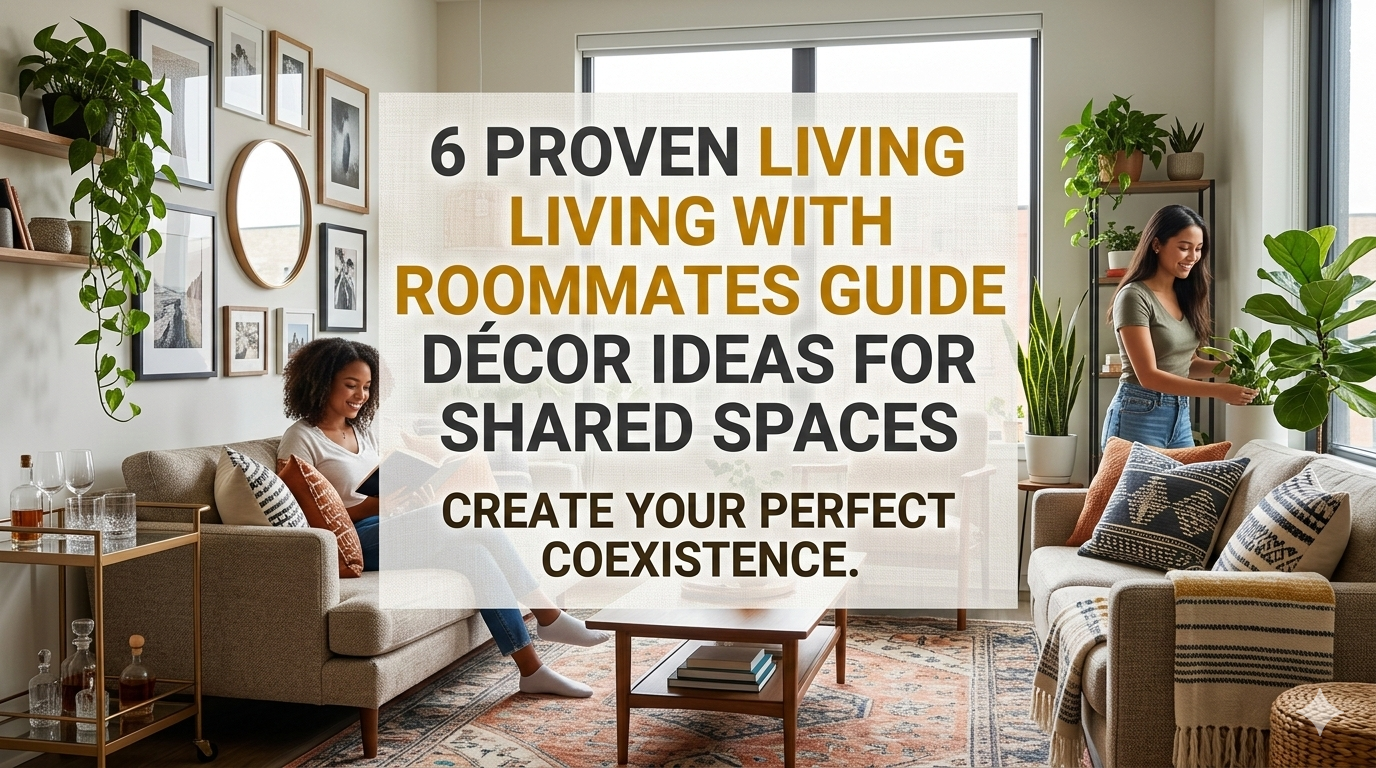
Meta Description: Living with roommates guide décor ideas can transform your shared space into a stylish, functional home everyone loves. Discover 6 proven tips that actually work.
6 Proven Living with Roommates Guide Décor Ideas for Shared Spaces
While living in a shared house or apartment with your roommates is a fun — and sometimes harsh — reality, the furniture and décor you include can make all the difference.
6 Tested Best Décor Ideas for Living with Roomies
Living with roommates can be fun — but let’s be honest, it can also get messy quickly. Not only a physical mess but an eyesore as well.
Things can get complicated when two or more people with different tastes, habits, and Pinterest boards try to decorate one space. Someone loves minimalist white walls. Someone else is craving bold colors and maximalist energy. And suddenly the living room resembles a clash-of-styles battlefield.
But here’s the good news: it doesn’t have to be this way.
The right approach can make shared spaces actually look incredible. Better than what any individual person could do on their own. The secret is communication, compromise, and some clever home décor strategies that can please everybody.
Here are 6 tried and true living with roommates guide décor ideas which help you create a place that feels like home — for each of you.
Why Decorating a Shared Space Is Unique
Decorating a solo apartment is an easy endeavor. You make all the calls. You put up the posters you like. You pick the rug. Done.
Shared spaces are a whole other problem.
You’re not just decorating. You’re negotiating. You’re balancing personalities. You’re trying to make a space comfortable and personal — but also communal.
Here’s what makes it tricky:
- Different aesthetic preferences
- Different budgets
- Different ideas about cleanliness and order
- Fear of causing damage to walls or furniture
- The fact that someday, someone might pack up and leave
These challenges are real. But they’re also totally solvable. Let’s get into how.
Idea #1: Build a Shared Style Foundation First
Before you purchase the first throw pillow or wall print, sit down together and discuss style.
This sounds boring. It’s actually the most important step.
Have a “Style Date” With Your Roommates
Set aside 30 minutes. Everyone pulls up their favorite home inspiration images — from Instagram, Pinterest, Houzz, or wherever. Then you compare.
You will probably discover more overlap than you anticipate.
Perhaps you each have a love of warm earth tones. Perhaps you all agree that clutter makes the space stressful. Perhaps no one wants a super formal, stiff living room.
Those overlapping preferences? That’s your foundation.
Find the Common Ground
Look for common responses to questions such as:
- Warm or cool tones? (Earthy beiges vs. cool grays and blues)
- Minimal or cozy? (Plain and minimal vs. overstuffed and textured)
- Modern or vintage? (Sleek lines vs. nostalgic finds)
- Bold or neutral? (Statement colors vs. soft palettes)
Jot down three things that everyone agrees on. Build your shared décor language from those three things.
Create a Simple Style Board Together
Use a free tool like Canva or even a shared Google Doc with saved images. Pin colors, textures, furniture styles, and lighting ideas you all like.
This becomes your shared point of reference. When somebody wants to purchase something new, you cross-reference it with the board. Does it fit? If yes, it’s a green light.

Idea #2: Divide the Space With Purpose and Personality
One of the smartest things you can do in a shared home is define each area with a clear purpose — and designate personal zones for each person.
Zoning: The Secret to Harmony in Shared Spaces
Zoning refers to breaking up an open area into separate, designated zones. It’s a design technique that interior designers use in studio apartments and open-plan homes.
In a shared home, it serves two purposes:
- It keeps common areas functional and organized.
- It creates a sense of ownership within personal space for each roommate.
How to Zone Without Building Walls
You don’t need construction to create zones. Here are easy ways to do it:
| Zoning Tool | How It Works |
|---|---|
| Area rugs | Visually define a seating area or reading nook |
| Bookshelves | Soften the separation between a living and study space |
| Curtains | Offer privacy in studio layouts or open bedrooms |
| Furniture arrangement | Couches and tables naturally separate spaces |
| Lighting | A floor lamp in one corner creates a cozy, separate feel |
Give Each Roommate a Personal Zone
In addition to shared living spaces, everyone should have at least one area that is entirely theirs.
Even if it’s just a corner shelf in the living room or a specific spot in the entryway, that personal zone matters. It allows people to showcase their personality without conflicting with shared décor choices.
Idea #3: Go Neutral in Shared Areas, Bold in Private Ones
This is the golden rule of roommate decorating. And it works every single time.
Why Neutral Shared Spaces Work
Neutral doesn’t mean boring. Neutral means flexible, timeless, and easy for everyone to live with.
Approach shared spaces like a blank canvas. A warm beige or soft white wall allows everyone’s personal items to shine without clashing. A neutral sofa can be dressed up with throws and pillows that rotate based on the season — or based on whoever’s taste is leading that month.
Neutral shared spaces also photograph better, feel larger, and create less visual stress.
For more tips on creating a balanced shared living environment, check out Shared Flat Living — a great resource for roommates navigating life together.
The Best Neutral Palettes for Shared Spaces
Here are some popular neutral combinations that look great in shared homes:
Warm Neutrals:
- Beige + terracotta + warm white
- Camel + rust + cream
Cool Neutrals:
- Soft gray + white + black accents
- Greige (gray-beige) + dusty blue + ivory
Earthy Neutrals:
- Olive green + tan + natural wood
- Warm brown + sand + muted sage
Pick one palette. Stick to it in shared areas. Your home will instantly feel more cohesive — even if nothing else changes.
Go Bold in Private Spaces
Here’s where compromise gets fun: each person gets to go wild in their own bedroom.
One roommate can have a deep moody blue bedroom. Another can go full cottagecore with floral wallpaper and hanging dried flowers. These rooms don’t need to match each other or the shared spaces — because they’re private.
This separation of “shared neutral” and “private bold” is a simple concept that prevents a huge amount of style conflict.
Idea #4: Use Smart Storage to Keep Shared Spaces Clean and Stylish
Clutter is the number one enemy of a good-looking shared space. And in a home with multiple people, clutter builds up fast.
The solution isn’t just cleaning more often. It’s designing storage into the space from the start.
Storage That Looks Good
The best storage in a shared home is the kind that doubles as décor. You’re not hiding stuff in ugly plastic bins. You’re organizing things in ways that genuinely add to the room’s look.
Here are examples of storage that works as décor:
Woven baskets — Store blankets, magazines, or shoes. They look warm and textured.
Floating wall shelves — Display books, plants, and small items. Keeps floors clear.
Ottomans with hidden storage — A coffee table that also serves as a storage chest. Game-changer.
Pegboards — Great for kitchens and home offices. Keeps items visible and accessible.
Under-bed storage drawers — In bedrooms, maximize every square foot.
Set Clear Storage Rules Early
Even with great storage solutions, shared spaces stay messy if there are no agreed-upon rules.
Have a quick conversation about:
- Where does everyone’s mail go?
- Is the coffee table for display items only, or can people leave things there temporarily?
- Does each person have a designated shelf in the fridge?
- How often does everyone tidy the shared living room?
These small agreements prevent the low-key resentment that builds when one person feels like they’re always cleaning up after everyone else.
A Simple Shared Space Organization Chart
| Area | Storage Solution | Rule |
|---|---|---|
| Entryway | Hook rack + shoe basket | Shoes off at door, bags on hooks |
| Living room | Ottoman + woven baskets | Clear surfaces by 10pm nightly |
| Kitchen | Shelf labels + drawer organizers | Everyone cleans their own dishes same day |
| Bathroom | Tiered organizer + labeled bins | Each person gets one shelf |
Idea #5: Invest in Flexible, Multi-Use Furniture
Furniture choices make or break a shared living space. The wrong furniture leads to crowded rooms, arguments over placement, and wasted money.
The right furniture? It makes the space feel bigger, smarter, and more livable for everyone.
Why Multi-Use Furniture Matters in Shared Homes
When multiple people share a space, every square foot counts. Multi-use furniture solves several problems at once — storage, seating, surface area, and style.
Top Multi-Use Furniture Picks
Sofa bed or pull-out couch — Extra sleeping space for guests without a dedicated guest room.
Expandable dining table — Small when it’s just the two of you, large when hosting friends.
Nesting tables — Stack when not in use, spread out when you need more surface area.
Murphy bed (wall bed) — Transforms a bedroom or studio into a daytime living area.
Bench with storage — Works at the entryway, end of bed, or in the living room.
Bar cart — Doubles as a beverage station and a display piece.
The Budget Talk: Splitting Furniture Costs Fairly
Furniture is expensive. When you share a space, you can split costs — but you need a clear agreement.
Here’s a simple system:
- List what the shared space needs (couch, coffee table, rug, lighting, etc.)
- Assign each item to one person based on who wants it most or who has the budget
- Keep receipts and track who paid for what
- Decide what happens to each item if someone moves out before purchasing
That last point is important. Avoid “joint purchases” of expensive items with no plan. It turns a living room update into a breakup negotiation later.
Idea #6: Make Walls Work for Everyone Without Damaging Them
Bare walls make a space feel unfinished. But hanging things on walls in a rented shared home comes with real risks — damage deposits, landlord restrictions, and roommate disagreements about what goes up.
Here’s how to solve all of that.
Damage-Free Wall Décor Options
These solutions work in rentals and shared homes where you can’t drill or paint freely:
Command strips and hooks — Hold frames, mirrors, and lightweight shelves. Removable without damage.
Removable wallpaper — Transform an accent wall without any commitment. Peels right off.
Washi tape art — Create geometric patterns or frame poster prints directly on the wall.
Leaning art and mirrors — No hanging needed. Lean large frames or mirrors against walls.
Gallery ledges — Narrow shelves that let you display and swap art without nails.
How to Agree on Wall Art in Shared Spaces
Wall art is deeply personal. One person’s favorite abstract print is another person’s eyesore.
Here’s a guide to selecting shared wall art:
- Stick to neutral or nature-based art in common areas — landscapes, botanicals, abstract shapes
- Go black and white for a chic look that almost everyone can agree on
- Rotate art seasonally so everyone’s pieces get featured at different times
- Give each person one wall or section to decorate however they want
Create a Gallery Wall Together
A gallery wall is one of the best roommate décor projects. Here’s why:
- It can include different styles and sizes of frames
- Each person contributes pieces they love
- When displayed together with intention, mixed styles actually look great
- It becomes a conversation piece and a story of everyone who lives there
According to Architectural Digest’s guide to gallery walls, using matching frame colors — all black, all white, or all natural wood — is the simplest trick to make a diverse collection of art look intentional and polished.

Bonus Tips: Small Things That Make a Big Difference
Sometimes it’s not the big furniture or the wall art that transforms a shared space. It’s those simple, effortless additions that tie everything together.
Plants
Greenery is the universal decorator. Plants work in every style — minimalist, bohemian, modern, cozy. They add life, improve air quality, and make any space feel more welcoming.
A few low-maintenance picks for shared homes:
- Pothos (nearly impossible to kill)
- Snake plant (tolerates low light)
- ZZ plant (great for busy people)
Assign one person to plant care or rotate the responsibility. Dead plants are worse than no plants.
Lighting Layers
Most apartments have one overhead light source. That’s almost never enough for a cozy, functional shared space.
Add layers:
- Floor lamp in the living room corner
- Table lamp on the side table or console
- String lights for soft ambient glow
- Under-cabinet lighting in the kitchen
Warm bulbs (2700K–3000K) make any room feel instantly cozier.
Textiles
Rugs, throw blankets, and cushions are the fastest way to warm up a space and tie colors together.
The rule of thumb:
- One large area rug to anchor the living room
- Two to three throw pillows per seating section
- At least one throw blanket per couch
These don’t need to be expensive. IKEA, TJ Maxx, and thrift stores are goldmines for affordable textiles.
Scent
This one gets overlooked, but it matters. A shared home should smell good — or at least neutral.
Agree on a shared scent for common areas. A diffuser with a neutral essential oil blend, a candle everyone likes, or even just keeping the kitchen fresh can change the feel of the whole home.
Avoid strong, polarizing scents. Stick to light options: citrus, lavender, eucalyptus, or cedar.
Common Roommate Décor Mistakes to Avoid
Even with good intentions, shared space decorating goes wrong in predictable ways. Here’s what to watch out for:
| Mistake | Why It’s a Problem | Fix |
|---|---|---|
| Decorating without consulting roommates | Creates resentment and clashing styles | Always check in before making changes |
| Buying cheap furniture to “save money” | Falls apart fast, looks bad | Invest in 2–3 quality key pieces |
| Ignoring storage from the start | Space gets cluttered quickly | Plan storage before decorating |
| Too many clashing styles in shared areas | Looks chaotic and unintentional | Agree on a shared style foundation |
| Hanging too much on walls | Overwhelming and hard to change | Edit ruthlessly — less is more |
| Not planning for move-out | Awkward furniture disputes | Decide ownership before purchasing |
FAQs: Living With Roommates Guide Décor Ideas
Q: How do I decorate a shared space when my roommate has a completely different style?
Start by finding what you have in common, not what’s different. Focus on neutral shared spaces and give each person a personal zone to express their individual style freely. Common ground is almost always there — you just have to look for it.
Q: Can we decorate a rental apartment without losing the security deposit?
Absolutely. Use removable wallpaper, Command strips, leaning art, gallery ledges, and damage-free hooks. These solutions let you transform a space without making any permanent changes.
Q: How do we split the cost of shared décor items fairly?
Make a list of what’s needed, assign each item to one person, keep receipts, and agree upfront on what happens to each item if someone moves out. A simple shared spreadsheet works great for this.
Q: What’s the easiest single change that makes a shared space look better instantly?
Add a large area rug to the living room and layer your lighting. These two changes do more for a room’s look and feel than almost anything else.
Q: What do we do when a roommate wants to add something I don’t like?
Have an honest conversation. Use the style board you created together as a reference. If something clearly doesn’t fit the agreed style, it’s fair to say so. If it’s just a personal preference, consider compromising — maybe it goes in their room instead of the shared space.
Q: How often should roommates redecorate or refresh shared spaces?
A light seasonal refresh (swapping textiles, adding plants, changing candles) every few months keeps the space feeling current without requiring major effort or expense. A bigger refresh once a year — or whenever someone new moves in — is also a great idea.
Wrapping It All Up
Having roommates doesn’t mean settling for a space that feels like nobody’s home — or worse, like everyone is fighting over it.
With the right approach, a shared space can be one of the most dynamic, interesting, and comfortable places you’ve ever lived in.
Here’s a quick recap of the 6 proven living with roommates guide décor ideas:
- Build a shared style foundation — Find common ground before buying anything
- Divide the space with purpose — Zone areas and give everyone personal territory
- Go neutral in shared areas, bold in private ones — The golden rule of shared decorating
- Use smart storage — Design organization into the space from day one
- Invest in flexible, multi-use furniture — Make every piece work harder
- Make walls work for everyone — Damage-free solutions that let everyone’s style shine
Start with one idea. Talk to your roommates. Make one small change this week.
Because a great shared space doesn’t happen by accident. It happens by design — and by people who actually choose to work together on it.
Ready to start? Pull up a Pinterest board, invite your roommates to a style chat, and begin building the shared space you all actually want to come home to.