

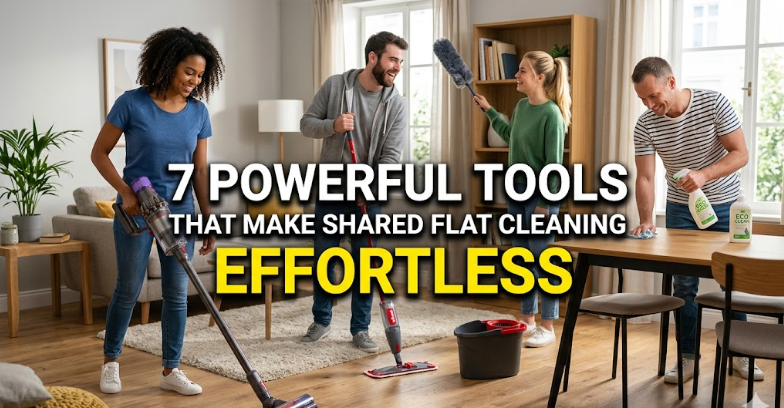
7 powerful tools that make shared flat cleaning effortless
Living in a shared flat sounds simple in theory. You split rent, share responsibilities, and maybe even build friendships along the way. In practice, though, cleaning becomes the quiet battlefield no one openly signs up for. A sink full of dishes, crumbs that magically multiply overnight, and that one mysterious stain no one claims responsibility for — these are the small but persistent realities of shared living.
Over time, I realized something important: cleaning itself isn’t the hardest part. It’s the inconsistency, the miscommunication, and the sheer mental load of deciding when and how to clean. That’s where the right tools come in. Not just physical tools, but systems, habits, and clever setups that quietly do the heavy lifting.
Below are seven powerful tools that don’t just make cleaning easier — they make it almost automatic. Think of them as silent roommates who actually do their job.
tool 1: the “two-minute reset” timer
This is the simplest tool, yet probably the most transformative. Instead of waiting for the flat to become unmanageable, you set a daily two-minute timer — yes, just two minutes.
During those two minutes, everyone does a quick reset:
– put away items lying around
– wipe a visible surface
– throw away trash
– stack dishes neatly
It sounds too small to matter, but that’s exactly why it works. There’s no resistance. No one argues about fairness because the commitment is minimal.
Over time, this builds a rhythm. Mess never gets the chance to grow into something overwhelming. The flat starts to feel consistently “under control,” even if no deep cleaning has happened.
You’re not cleaning the entire space — you’re preventing chaos from forming.
tool 2: labeled cleaning zones
Shared spaces often suffer from a simple problem: unclear responsibility. Everyone assumes someone else will handle it.
The solution? Divide the flat into clear zones and label them — not aggressively, but visibly enough to create ownership.
For example:
– kitchen counter → person A
– living room floor → person B
– bathroom sink → person C
You can write this on a small whiteboard, a shared note, or even a printed sheet stuck to the fridge.
The magic here isn’t enforcement. It’s clarity.
When responsibility is defined, hesitation disappears. No more “should I do this?” moments. People act faster because they know it’s theirs.
Interestingly, this often leads to people doing extra work voluntarily, simply because they’re already in motion.
tool 3: multi-surface cleaning spray
If there’s one physical tool that earns its place in every shared flat, it’s a reliable multi-surface cleaning spray.
Why? Because friction kills cleaning habits. If someone has to look for different products for different surfaces, they’ll likely skip the task altogether.
A single bottle that works on:
– countertops
– tables
– appliances
– shelves
…removes decision-making from the process.
Keep it visible. Not hidden under the sink, but somewhere easy to grab. Pair it with a microfiber cloth nearby.
The easier it is to clean something, the more likely it gets cleaned immediately — not postponed.
tool 4: the “one-touch rule” system
This is less of an object and more of a behavioral tool, but it’s incredibly effective.
The rule is simple: when you pick something up, deal with it in one go.
For example:
– don’t move a plate from table to sink — wash it or place it properly
– don’t shift clothes from chair to bed — fold or store them
– don’t relocate trash — throw it away
This eliminates “temporary mess,” which is the biggest source of clutter in shared flats.
Most mess isn’t intentional. It’s the result of half-finished actions. The one-touch rule closes that loop.
Once this becomes a shared habit, the flat naturally stays cleaner without any dedicated cleaning sessions.
tool 5: shared digital checklist
People often resist cleaning schedules because they feel rigid. But a shared digital checklist feels different — it’s flexible, visible, and low-pressure.
You can use any basic app or even a simple shared note. The key is to list recurring tasks like:
– take out trash
– mop floor
– clean bathroom
– restock supplies
Instead of assigning strict deadlines, let people tick off tasks when they complete them.
This creates subtle accountability. No one wants to be the person who never checks anything off.
It also gives a sense of progress. Cleaning stops feeling like a never-ending chore and starts feeling like a series of completed actions.
tool 6: a central cleaning station
One underrated problem in shared flats is scattered cleaning supplies. When tools are spread across different cupboards or rooms, cleaning becomes inconvenient.
The solution is a central cleaning station — a single place where all essentials are kept:
– spray bottles
– cloths
– gloves
– trash bags
– sponges
You don’t need anything fancy. A small basket or box works perfectly.
Place it in an accessible area, like near the kitchen or hallway.
This turns cleaning into a “grab-and-go” action. No searching, no delays. The moment someone notices a mess, they can deal with it instantly.
tool 7: the weekly “soft reset”
Deep cleaning often feels like a burden because it’s seen as a major event. Instead, introduce a weekly soft reset — a lighter, more manageable version.
Set aside 20–30 minutes once a week where everyone contributes simultaneously.
Tasks can include:
– vacuuming common areas
– wiping surfaces thoroughly
– organizing shared items
– emptying bins completely
The key is doing it together. It creates a shared rhythm and reduces the feeling of unfairness.
Because it’s short and collective, it doesn’t feel like a chore. It feels more like maintenance.
And importantly, it prevents the need for exhausting, all-day cleaning sessions.

the real shift: from effort to system
What ties all these tools together is a simple idea: cleaning becomes effortless when it’s built into the environment, not forced through willpower.
Most shared flats struggle not because people are lazy, but because the system around them is unclear or inconvenient.
When tools reduce friction, define responsibility, and encourage small consistent actions, cleaning stops being something you “have to do” and becomes something that just happens.
You don’t wait for motivation. You design around its absence.
small details that quietly matter
Beyond the main tools, there are small adjustments that amplify their impact:
– keep trash bins in convenient locations, not hidden corners
– use hooks and baskets to reduce surface clutter
– avoid overloading shared spaces with unnecessary items
– communicate casually, not confrontationally, about cleaning
These details don’t require effort, but they shape behavior in subtle ways.
A well-designed space naturally encourages cleanliness.
what effortless actually looks like
Effortless doesn’t mean zero work. It means the work doesn’t feel heavy.
In a well-managed shared flat:
– dishes don’t pile up for days
– surfaces rarely get visibly dirty
– cleaning happens in small, almost invisible bursts
– no one feels burdened or resentful
It’s not perfection. It’s balance.
And once you experience it, it’s hard to go back to the chaos of unmanaged shared living.
frequently asked questions
- what if my flatmates don’t follow any cleaning system?
Start small and lead by example. Introduce one tool at a time, like the two-minute reset or a shared checklist. People are more likely to join when they see it working rather than being told to follow rules.
- how do we handle someone who consistently avoids cleaning?
Instead of confrontation, focus on visibility. Shared checklists and defined zones make contributions (or lack of them) obvious without direct conflict. If needed, have a calm, practical conversation about fairness.
- are expensive cleaning tools necessary for shared flats?
Not at all. Most effective tools are simple and affordable — sprays, cloths, baskets, and basic organization systems. The real value comes from how they’re used, not how much they cost.
- how often should a shared flat be deep cleaned?
With the right systems in place, deep cleaning isn’t needed frequently. A weekly soft reset combined with daily small actions usually keeps the flat in good condition.
- what’s the best way to divide cleaning tasks fairly?
Use zones or rotate responsibilities weekly. The key is clarity and flexibility. Avoid rigid schedules that feel restrictive — instead, focus on shared accountability.
- how do we keep cleaning from becoming stressful?
Keep tasks small, consistent, and visible. Avoid letting mess build up. When cleaning is part of daily life rather than a big event, it feels manageable and even routine.
closing thought
Shared flat cleaning isn’t about discipline or strict rules. It’s about designing a system where the right actions are the easiest ones to take.
With the right tools in place, you don’t need reminders, arguments, or motivation. The space takes care of itself — quietly, consistently, and almost effortlessly.