

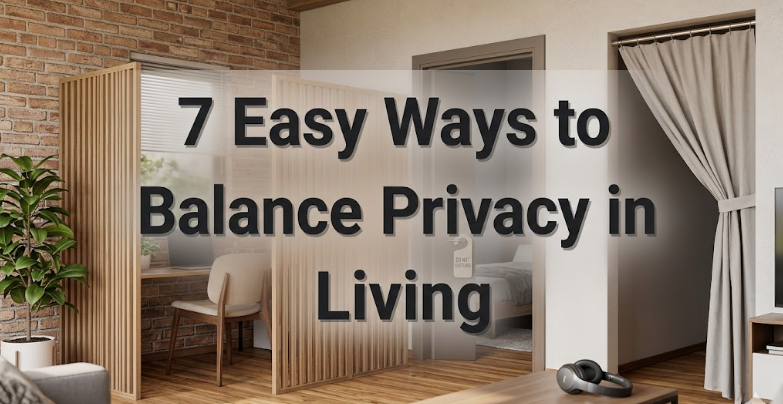
7 Easy Ways to Balance Privacy in Shared Flat Living
Living in a shared flat can be one of the most practical and affordable ways to live, especially in busy cities where rent is high and finding independent housing is difficult. But while shared living has its benefits—lower costs, social interaction, and shared responsibilities—it also comes with one major challenge: privacy.
When you live with others, your personal space, habits, and boundaries are constantly interacting with someone else’s lifestyle. Without clear systems in place, it becomes easy to feel like you never truly have time or space for yourself.
Balancing privacy in shared flat living is not about isolating yourself from others. It’s about creating a respectful environment where everyone feels comfortable, safe, and mentally at ease. Here are seven practical and realistic ways to achieve that balance.
- Set clear personal boundaries from the beginning
One of the biggest mistakes people make when moving into a shared flat is assuming that privacy rules will naturally develop over time. In reality, unspoken expectations often lead to misunderstandings.
Setting boundaries early helps avoid future conflict. These boundaries can include:
- Whether roommates are allowed to enter your room without permission
- Your preferred quiet hours
- How you feel about borrowing personal items
- When you prefer not to be disturbed
Having a conversation about boundaries in the first few days of moving in sets a healthy tone. It doesn’t have to be formal or awkward. A simple discussion over tea or during a shared meal can work.
What matters is clarity. Once boundaries are set, they should be respected consistently by everyone in the flat.
- Respect closed doors as a rule of privacy
A closed door should always be treated as a sign of privacy unless stated otherwise. This is one of the simplest but most important rules in shared living.
If someone’s room door is closed:
- Knock before entering
- Wait for permission before walking in
- Avoid entering even for “quick questions” unless urgent
Similarly, if you want privacy, don’t hesitate to close your door. Many people feel guilty about it at first, but it is completely normal and healthy.
A shared flat works best when everyone understands that personal space is not a luxury—it’s a necessity.

- Create shared rules for common areas
Privacy is not only about your bedroom. It also extends to how common spaces like the kitchen, living room, and bathroom are used.
When shared areas are well-managed, everyone naturally feels more comfortable. Some useful agreements include:
- Cleaning up immediately after use
- Scheduling bathroom or kitchen peak hours if needed
- Avoiding long personal calls in shared spaces
- Not leaving personal belongings scattered around
These rules help prevent frustration and reduce situations where someone feels like their privacy is being indirectly invaded through mess or noise.
Shared areas should feel neutral—not dominated by one person’s habits or presence.
- Use headphones and digital privacy habits
Modern shared living includes another layer of privacy: digital space. Even if physical boundaries are respected, noise and technology can still interfere with personal comfort.
Some simple habits that help:
- Use headphones for music, videos, or calls
- Keep phone conversations private instead of using speaker mode
- Avoid sharing devices or passwords casually
- Be mindful of screen visibility in shared spaces
These habits are especially important in small flats where walls are thin and rooms are close together. Something as simple as using headphones can make a big difference in maintaining peaceful coexistence.
- Build a respectful communication style
Privacy issues are often not caused by lack of space, but by lack of communication. Many people avoid speaking up about discomfort, which leads to frustration building silently.
A respectful communication style includes:
- Talking directly instead of leaving passive hints
- Avoiding blame-based language
- Addressing issues early, not after they escalate
- Listening to others’ perspectives as well
For example, instead of saying “You’re always disturbing me,” a better approach is:
“I find it hard to focus when there is noise late at night. Can we adjust that timing?”
This kind of communication protects relationships while also protecting personal boundaries.
- Create personal zones even in shared rooms
Not every shared flat offers private bedrooms. In some cases, people share rooms or live in very small spaces. In such environments, creating personal zones becomes even more important.
You can create privacy zones using:
- Curtains or room dividers
- Separate study corners
- Personal shelves or storage boxes
- Headphones as a psychological “do not disturb” signal
Even small visual boundaries help the brain recognize personal space. It gives a sense of control, even in limited environments.
The goal is not to physically separate everything but to mentally define “this is mine” and “this is shared.”
- Respect timing and social energy levels
Privacy is not only physical—it is also emotional and social. Everyone has different energy levels and social preferences.
Some people enjoy conversation and interaction after a long day, while others need silence and isolation to recharge.
Respecting this includes:
- Not forcing conversations when someone seems tired
- Understanding when roommates prefer alone time
- Being mindful of late-night social activity
- Giving space without taking it personally
A healthy shared flat is one where silence is not awkward and solitude is not misunderstood.
When timing and energy levels are respected, privacy becomes effortless instead of something that constantly needs negotiation.
Conclusion
Balancing privacy in shared flat living is not about building walls between people. It is about creating invisible agreements that make everyone feel respected and secure.
When boundaries are clear, communication is honest, and shared spaces are managed thoughtfully, privacy becomes a natural part of daily life rather than a constant struggle.
Good shared living is not defined by how much time people spend together, but by how comfortably they can coexist when they are apart.
Frequently Asked Questions (FAQs)
- How do I ask my roommate for more privacy without sounding rude?
The best approach is to be calm and direct. Use “I” statements instead of blaming language. For example, say “I need some quiet time in the evenings to focus” rather than “You are too loud.”
- Is it normal to want complete privacy in a shared flat?
Yes, it is completely normal. Even in shared living situations, everyone needs personal space and time alone. Wanting privacy does not mean you dislike your roommates.
- What should I do if my roommate constantly invades my space?
Start by communicating clearly and politely. If the behavior continues, reinforce your boundaries more firmly. In persistent cases, involving a landlord or mediator may be necessary.
- Can privacy exist in a very small shared apartment?
Yes, but it requires creativity. Using headphones, dividers, personal schedules, and respectful routines can help create psychological privacy even in limited physical space.
- How do I balance being friendly with maintaining privacy?
You can be friendly without being constantly available. Set expectations early about your need for alone time, and maintain regular but balanced social interaction with roommates.
- What is the most important rule for privacy in shared living?
Respect. When all roommates respect each other’s boundaries, space, and time, most privacy issues naturally disappear without conflict.