

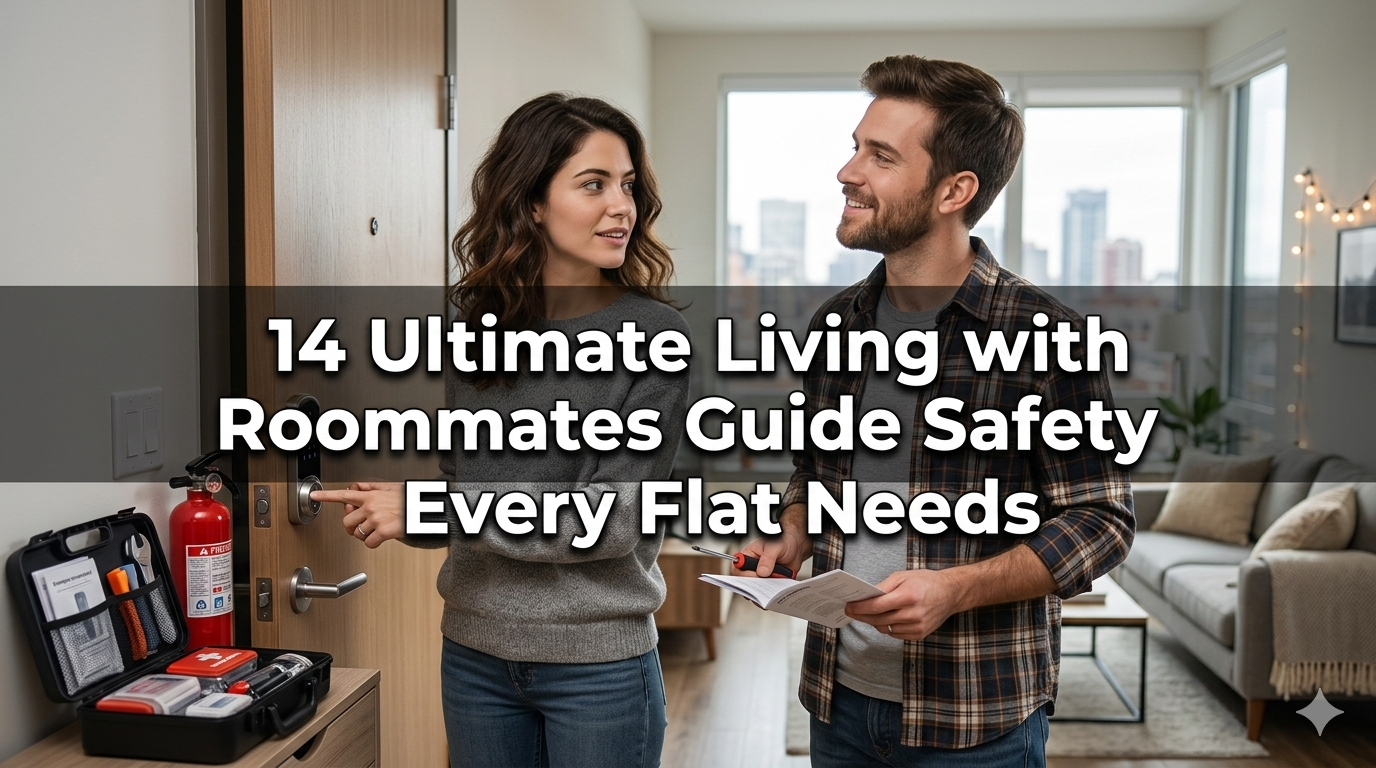
Meta Description: Roommates guide: 14 safety measures that every flatshare needs to ensure everyone feels protected, comfy, and busy not doing the washing up in 2025.
14 of The Ultimate Living with Roommates Guide Every Flat Needs
One of the best things you can do is share a flat. It saves money, creates friendships, and makes life in the city a lot more livable.
But it also carries real risks.
From leaving doors unlocked to kitchen blazes, common living spaces can become perilous quickly — particularly when several people have contradictory habits and routines. It pays off to prepare a bit in advance.
In our guide to living with roommates, you can read about the 14 roommate safety tips that every shared flat needs NOW. Whether you are living with strangers or longtime friends, these tips will ensure that everyone feels safe, respected, and protected.
Let’s get into it.
Safety in Shared Flats: A Justified Concern
For most roommate conversations, rent splits, chore schedules, and quiet hours are discussed. Safety? It usually gets skipped.
That’s a problem.
A renter in shared housing is statistically more likely than a solo occupancy person to experience break-ins, fire incidents, and personal property theft, according to the UK’s Home Office Crime Statistics. The logic is simple — more humans creates more points of entry, more habits to manage, and more opportunities for something to go awry.
Security in a shared flat is not only about physical safety. It covers:
- Fire prevention
- Mental health boundaries
- Digital privacy
- Emergency preparedness
- Personal space protection
It makes all the difference when everyone in the flat takes these seriously — the overall living situation improves as a result. When they don’t, minor problems can become major ones.
Tip 1: Establish a Flat Safety Meeting Before Moving In
Before you unpack boxes, convene everyone for a quick flat safety conversation.
It doesn’t have to be formal. Thirty minutes over takeout will do just fine.
Cover these basics:
- Who has copies of the keys?
- Where are the fire exits?
- What’s the emergency contact list?
- If something breaks, who do you contact?
Why this works: People are more likely to follow the rules if they know them in advance. It also establishes a tone of respect and shared responsibility.
Set up a simple shared notes document — on Google Docs or even a WhatsApp pinned message — that everyone is able to access. Include the landlord’s contact information, utility account numbers, and the nearest hospital or urgent care center.
Tip 2: Change the Locks (or At Least Check Them)
This is one of the most neglected steps in any guide to living with housemates.
The problem with moving to a new flat is that you frequently do not know who had keys before you. Previous tenants, their exes, their friends — anyone could have had a copy.
Here’s what to do:
| Action | Who’s Responsible | Cost Estimate |
|---|---|---|
| Request lock change from landlord | All roommates jointly | Usually free (landlord’s duty) |
| Buy a door reinforcement bar | Any roommate | £10–£30 |
| Install a smart lock | All agree + landlord approval | £50–£150 |
| Add a chain or deadbolt | With landlord permission | £15–£40 |
Most rental agreements in the UK and US require landlords to supply secure locks. If yours are dated or dysfunctional, make the request in writing.
Tip 3: Develop an Effective Visitor and Guest Policy
Guests can be one of the biggest sources of tension — and risk — in shared flats.
It’s not just about noise. It’s about safety.
A guest of a roommate who’s unfamiliar with the flat might leave doors unlocked, prop fire exits open, or act in a way that makes other residents uncomfortable. At worst, in rare instances, the wrong kind of guest can represent a serious safety risk.
The guest policy should cover:
- How much advance notice should roommates provide before inviting guests?
- Are overnight guests allowed? How often?
- Are there common areas guests do not have access to after a certain hour?
- What if damage is done by a guest?
Write this down. Keep it somewhere visible. Consult it should issues arise.
This isn’t about being unfriendly. It’s about making sure that everyone feels safe in their own home.
Tip 4: Put Smoke Alarms in All the Right Places
You’d be surprised at how many shared flats miss this.
It is a legal requirement for landlords in the UK to install working smoke alarms on every floor of any rental property. But the legal requirement and actual practice don’t always match.
Check these locations:
- Kitchen (use a heat alarm here — not a smoke alarm; cooking steam will set off false alarms)
- Living room
- Each bedroom hallway
- Close to the boiler or heating unit
Test all alarms together as a flat — preferably once a month. Change batteries every year, or install alarms with sealed 10-year batteries.
Pro tip: Place a small sticky note on every alarm with the last date it was tested. It takes 10 seconds and makes it easy to monitor.
Tip 5: Know Where the Gas and Water Shut-Offs Are
Emergencies don’t come with instructions.
If a pipe bursts, or you smell gas at 2am, there won’t be an opportunity to Google where the shut-off valve is. Everyone in the flat should know — before anything goes wrong.
Make a quick map:
- Where is the main water stop-cock?
- Where is the gas meter and emergency shut-off?
- Where is the fuse/circuit breaker box?
- What’s the emergency gas number? (In the UK: 0800 111 999)
Keep this information pasted on the inside of a kitchen cupboard. Take a picture of it and send it in the flatmate group chat.
This one step could save thousands of pounds in water damage — or worse.
Tip 6: Maintain a Fully Stocked First Aid Kit in a Known Place
Everyone who has access to the flat should know where the first aid kit is kept — not just who owns it.
A minimal first aid kit should consist of:
- Plasters in various sizes
- Sterile gauze and bandages
- Antiseptic wipes and cream
- Scissors and tweezers
- Disposable gloves
- A cold pack
- Pain relief tablets (ibuprofen, paracetamol)
- A basic first aid guide
Designate one person to check the kit every three months. Dispose of expired or used supplies.
Leave it in the kitchen or bathroom — somewhere everyone passes through regularly. For more practical tips on organising your shared space, visit Shared Flat Living — a great resource for flatmates who want to live smarter and safer together.
Tip 7: Lock Your Bedroom Door (Yes, Even If You Have Roommates You Trust)
This piece of advice makes some people uncomfortable. It sounds as if you don’t trust your flatmates.
But the truth is, locking your bedroom has nothing to do with mistrust.
It’s about guarding your things from guests, from mishaps, and — in worst-case scenarios — from situations you didn’t anticipate.
Reasons to lock your bedroom:
- Guests might accidentally (or not so accidentally) wander in
- Theft among roommates, though relatively uncommon, does occur
- Valuable electronics, jewellery, or medication needs protection
- Your space is your personal territory
A basic keypad lock will set you back £20–£40 and provides peace of mind with no key to manage. Most models support fingerprint entry, which is very convenient.
Tip 8: Protect Your Digital World in Shared Spaces
It’s not just about physical security.
In a shared flat, digital security matters just as much — and is far more frequently neglected.
Here’s what to watch for:
Shared Wi-Fi Risks
In theory, anyone on the same Wi-Fi network can see other people’s traffic. If you handle sensitive data at home, use a VPN. This is crucial if you work from home or use online banking.
Device Safety
In shared common areas, don’t leave laptops, tablets, or phones unlocked. A curious roommate or visitor could access private accounts, saved passwords, or personal files.
Smart Home Devices
If your flat has smart speakers, cameras, or doorbells, agree as a flat on:
- Who has admin access
- Where cameras point (never toward private areas)
- How recordings are saved and deleted
Password Sharing
Do not share your streaming service passwords with flatmates through shared notes apps or sticky notes. Use the appropriate sharing settings within the service itself.
Tip 9: Establish Roles for Fire Safety
The best time to plan is now — the worst possible moment would be when a fire alarm goes off.
Sit down as a flat and assign basic fire safety roles:
| Role | Responsibility |
|---|---|
| Fire Warden | Ensures all rooms are clear before leaving |
| Assembly Point Leader | Guides the group to the designated meeting point |
| Emergency Caller | Calls 999 and remains on the line |
| Landlord Notifier | Calls landlord after everyone is safe |
It may seem overly formal, but this takes five minutes and could potentially save a life.
Also, agree on a meeting point outside the building. Make sure everyone knows it.
Tip 10: Handle Medication and Substances With Care
Living together often means sharing the same medicine cabinet — and that’s a recipe for disaster.
Store prescription drugs in your locked bedroom, not in a shared bathroom cabinet. This protects you from:
- Unintentional use by flatmates or visitors
- Deliberate misuse
- Theft
Keep medications that require refrigeration in a small personal mini-fridge in your room if possible, or label them clearly in the main fridge with your name and a note stating they are prescription items.
Also, have a frank conversation as a flat about whether recreational substances can be used in shared spaces. This isn’t a judgment — it’s about ensuring that everyone is comfortable and that no one is exposed to something they didn’t agree to.
Tip 11: Make Sure the Kitchen Is Safe From Fire Hazards
The vast majority of home fires begin in the kitchen.
In a shared kitchen, several people cook at various times of day, with varying degrees of care.
Daily kitchen safety checklist:
- ✅ Never leave cooking unattended on the hob
- ✅ Keep tea towels away from open flames
- ✅ Regularly clean the grill tray (grease buildup is a fire risk)
- ✅ Make sure the oven and hob are turned off before going to bed
- ✅ Don’t overload plug sockets with kitchen appliances
- ✅ Keep a fire blanket under the sink or next to the cooker
A fire blanket costs about £8–£15 and is far more effective than water or a towel for smothering kitchen fires.
Consider putting up a small whiteboard near the cooker that flatmates can mark off “hob off” before leaving. Simple, but effective.
Tip 12: Establish and Respect Boundaries Around Personal Space and Belongings
This advice straddles emotional safety and physical safety — both of which are important.
When personal limits aren’t honoured, conflict develops. Conflict in a shared flat can escalate in ways that become genuinely unsafe.
Establish clear rules around:
- Personal food in the fridge (labelled? shared section?)
- Borrowing items (always ask first — no exceptions)
- Using each other’s toiletries, clothing, or kitchen utensils
- Access to each other’s rooms when the person is not home
These conversations often feel awkward at first. But flatmates who have them early avoid the blow-ups that happen later.
Draft a shared house rules document. Keep it simple. Review it every couple of months, and update it if something isn’t working.

Tip 13: Make a Mental Health and Conflict Resolution Plan
Safety isn’t only physical.
Living in close proximity with other people is inherently stressful. Disagreements happen. Personalities clash. A bad week takes a toll on the entire flat.
A healthy flat has a conflict plan in place before conflict begins.
Here’s a simple framework:
Step 1: Direct Conversation First
If someone offends you, address it calmly and directly with that person. Don’t vent to other flatmates first — that creates sides.
Step 2: Use “I” Statements
“I feel uncomfortable when music is very loud after midnight” works better than “You’re so inconsiderate all the time.”
Step 3: Enlist a Neutral Third Party
If direct conversation doesn’t work, ask a trusted mutual friend or your student accommodation officer (if applicable) to help mediate.
Step 4: Document Serious Issues
If behaviour becomes threatening, document it with dates and times. This is critical if you ever need to involve a landlord or, in serious cases, the police.
Mental health matters in a flat. Check in on each other. Be aware of the signs that someone may be struggling, and know who to call. The NHS mental health support page is a helpful resource if you or a flatmate ever needs guidance.
Tip 14: Always Keep the Flat’s Entry Points Secure
Last — but by no means least in importance — is entry point security.
Most flat break-ins happen through the front door or ground floor windows. In shared living, it’s easy for someone to forget to lock up, prop a door open, or assume someone else took care of it.
Build a locking routine:
- Everyone locks the front door when they leave — no exceptions
- Ground floor windows are latched at night
- Back doors and fire exits are never propped open with furniture
- The buzzer/intercom is never used to let in strangers without verifying who they are
Consider a door sensor that sends all flatmates a phone alert when the front door is left open for more than a minute. These cost about £15–£25 online and sync to a free smartphone app.
Finally, check your building’s communal entry system. If the main building door lock is broken, notify building management right away. Don’t assume someone else will.
At a Glance: 14 Safety Tips
| # | Safety Tip | Priority Level |
|---|---|---|
| 1 | Hold a flat safety meeting | High |
| 2 | Change or check the locks | High |
| 3 | Set a guest and visitor policy | Medium |
| 4 | Install and test smoke alarms | High |
| 5 | Know gas and water shut-offs | High |
| 6 | Keep a stocked first aid kit | Medium |
| 7 | Lock your bedroom door | Medium |
| 8 | Secure your digital life | Medium |
| 9 | Agree on fire safety roles | High |
| 10 | Handle medication carefully | Medium |
| 11 | Kitchen fire safety habits | High |
| 12 | Set personal boundaries | Medium |
| 13 | Plan for mental health and conflict | Medium |
| 14 | Keep entry points locked | High |
Frequently Asked Questions
Q1: What’s the cardinal safety tip for living with roommates? The one step most likely to have the greatest impact is holding a flat safety meeting before or immediately when everyone arrives. It opens the door to discussions about locks, fire exits, emergencies, and boundaries — all in one go. That first conversation drives everything.
Q2: If I trust my roommates, do I still need to lock my bedroom door? Yes — and trusting your roommates is precisely why this is acceptable. It’s not about distrust. It’s about safeguarding your belongings from guests, mistakes, or unlikely scenarios you didn’t account for. Most roommates understand and respect this boundary.
Q3: My landlord says he will not change the locks when I move in. Can he do that? In most UK rental scenarios, your landlord is legally obligated to provide secure locks. If previous tenants had keys, you can request a lock change. Send the request in writing (email is acceptable) and retain a copy. If they refuse, contact your local council’s housing team for guidance.
Q4: How do I bring up safety rules without sounding paranoid? Frame it as pragmatism, not fear. Say something like: “Hey, I want to make sure we’re all on the same page about some basic stuff — fire exits, keys, guests — just so we’re not stuck dealing with it in a panic later.” The vast majority of roommates are glad someone took the initiative.
Q5: What can I do if a roommate makes me feel unsafe? Keep a record of specific incidents with dates and details. Communicate with your landlord in writing. Contact the police for threatening or illegal behaviour. Don’t downplay how you feel — your safety in your own home is non-negotiable.
Q6: How often should we test smoke alarms in a shared flat? Once a month is recommended. Keep it simple: choose the same day each month — the first Saturday, for example — and test them together. Change batteries every year, or use sealed long-life alarms.
Q7: Is the shared Wi-Fi network in a flat an actual security risk? It certainly can be, especially if a roommate or their guest uses the network for malicious activity, or if the router hasn’t been secured properly. Use a strong, unique Wi-Fi password, change it when roommates change, and consider using a VPN for personal browsing and work.
Wrapping It All Up
This living with roommates guide has nothing to do with fear. It’s about being prepared.
The best shared flats are not the ones where nothing ever goes wrong. They’re the ones where everybody knows what to do when something does.
Start with a conversation. A few simple tools also help — smoke alarms, a first aid kit, a door lock. Build habits around the kitchen and entry points. Give each other space — both physical and emotional.
Safety in a shared flat is a joint endeavour. When everyone takes it seriously, the whole experience gets better — less stress, more trust, and a place that genuinely feels like home.
Pick two or three tips from this list and act on them today. You don’t have to do it all at once. Just start.